Up the Missouri
May 14 to July 20, 1804
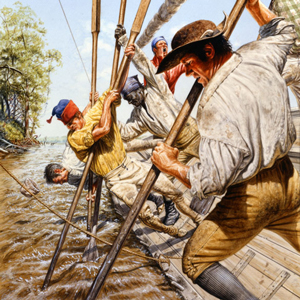
The two captains, Clark’s slave York, interpreter George Drouillard, eight or nine French engagés, 34 enlisted men, and Lewis’s dog Seaman depart in three boats: the barge and two large pirogues.
May 14 to July 20, 1804
The two captains, Clark’s slave York, interpreter George Drouillard, eight or nine French engagés, 34 enlisted men, and Lewis’s dog Seaman depart in three boats: the barge and two large pirogues.
July 21 to August 20, 1804
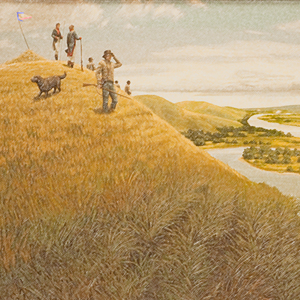
Following the Missouri River along the present-day Nebraska-Iowa border, the captains pay their respects to the late Omaha chief, Blackbird and conduct their first two Indian councils. Sergeant Charles Floyd becomes ill and passes away.
August 21 to September 8, 1804
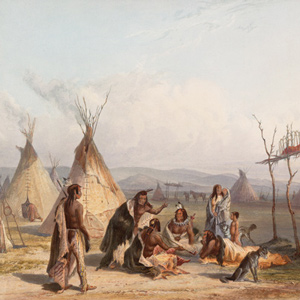
The stretch of the Missouri River along the present-day border between Nebraska and South Dakota was a flurry of activity. In just three days, a detachment visits the “Mountain of Little People,” today’s Spirit Mound, Patrick Gass is promoted to sergeant, and they first encounter the Yankton Sioux.
September 9 to October 25, 1804

The expedition meets the Lakota Sioux, and the encounter goes badly for both. They reach the lower Knife River Indian Villages, council with the Mandans and Hidatsas, and find a site to spend the winter.
October 26, 1804 to April 6, 1805
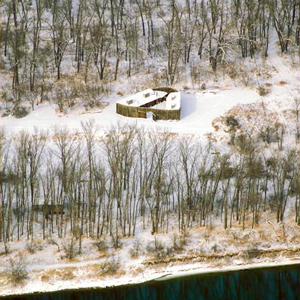
At the Knife River Villages, the winter of 1804–05 is brutally cold but the nearby Mandans and Hidatsas prove to be warm hosts. The captains hire trader Toussaint Charbonneau as an interpreter on the condition that he bring his Shoshone wife, Sacagawea. On 11 February, she gives birth to the couple’s first son, Jean Baptiste.
April 7 to June 12, 1805
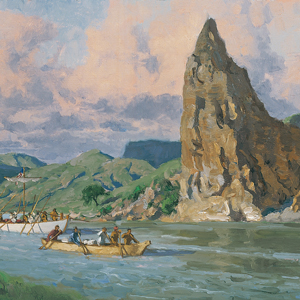
The Missouri River’s northernmost reach crosses western North Dakota and eastern and central Montana. The region may be barren, but geological riches include the Fort Union Formation and the “seens of visionary inchantment” in the Upper Missouri River Breaks.
June 13 to July 12, 1805
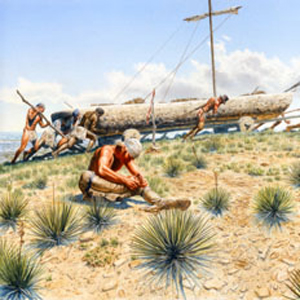
Lewis finds that the Falls of the Missouri are “truly magnifficent and sublimely grand” and Clark finds that the portage around them would be long and difficult. Sacagawea becomes “gravely ill.” Before continuing, they must build two new canoes to replace the cached pirogues.
July 13 to August 17, 1805
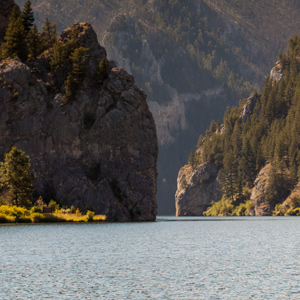
As the Missouri River flows south along the eastern edges of the Rocky Mountains, Clark lists each river constriction as a gate. Throughout this course, the river forks two times with each fork one-third the size than previous. The men are encouraged when Sacagawea starts seeing familiar landmarks. Scouting ahead, Lewis crosses the Continental Divide and meets the Shoshone. Meanwhile, Clark and the boats reach the end of the navigable river.
August 11 to September 10, 1805
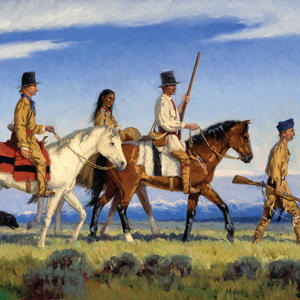
Aided by the Lemhi Shoshone Chief Cameahwait, Sacagawea’s brother, they begin a slow process to acquire horses, move necessary equipment and supplies across Lemhi Pass, and to cache the rest. They stumble across the Lost Trail divide, buy more horses from the Flathead Salish, and proceed down the Bitterroot River to Travelers’ Rest.
September 11 to October 17, 1805
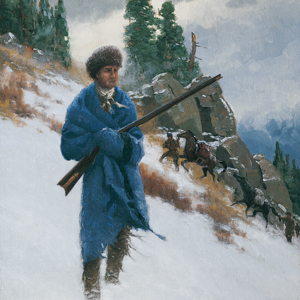
With Toby as their guide, the expedition leaves Travelers’ Rest and crosses the Bitterroot Mountains following an Indian road known today as the Lolo Trail. They encounter winter conditions and suffer from a lack of food. On the other side, Nez Perces at Weippe Prairie welcome the weary travelers.
September 20 to October 17, 1805
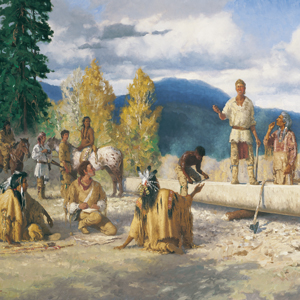
Tired and physically sick, the travelers recover and those who can, work to build five dugout canoes at camp on the Clearwater River. With no time for portages and despite the help of two Nez Perce river guides, several canoe accidents happen while negotiating rapids on the Clearwater and lower Snake.
October 18 to December 6, 1805
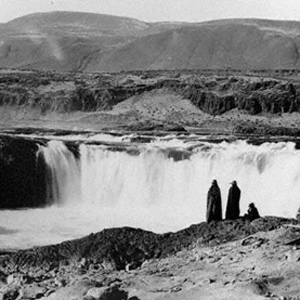
The best paddlers steer through The Dalles and Cascades of the Columbia without incident, and they all continue downriver passing numerous Lower Chinookan villages. After three weeks hunkering down in dismal nitches and bays, they cross to the southern shore and encamp at Tongue Point.
December 7, 1805 to March 22, 1806
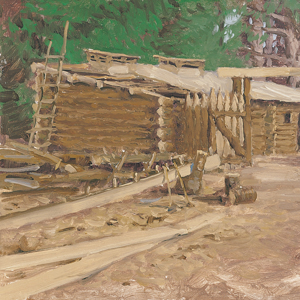
During their stay at the Pacific coast, they hunt elk, make salt at the beach, and buy fish, wapato, and conical hats from the Clatsops and Kathlamets. When Clark leaves to get blubber from a beached whale, Sacagawea—who still hasn’t seen the ocean—insists she be included in his group. In the spring, they are eager to leave.
March 23 to June 9, 1806
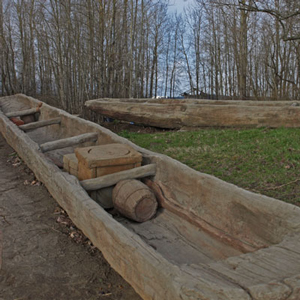
On their way up the Columbia River, they stop to hunt and dry meat, and to investigate the Willamette and Sandy rivers. Canoes are eventually traded or abandoned by the time they reach the Walla Walla River, they travel by horse to the Snake River. They encamp for several weeks waiting for mountain snows to melt.
June 10 to July 14, 1806
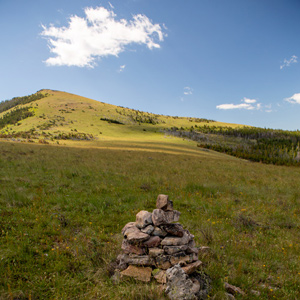
After splitting up at Travelers’ Rest, Lewis took a shortcut back to the Great Falls of the Missouri and then explored the upper Marias River.
July 15 to August 11, 1806
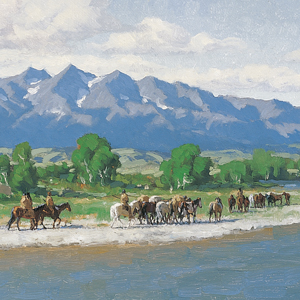
Clark leads a large group from Travelers’ Rest to the Beaverhead River where supplies and canoes are cached. Ordway takes the canoes to the Falls of the Missouri and Clark’s group paddles the Yellowstone in two small canoes lashed together. Pryor’s group must use bull boats after all the horses are stolen by Crows.
July 16 to August 11, 1806
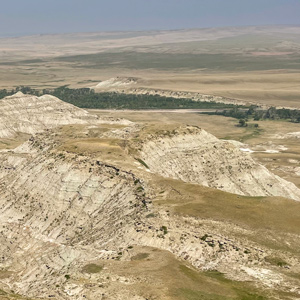
With only three others, Lewis continues his June 1805 exploration of the Marias River hoping to find its source north of the 50th parallel. They find that it flows south of the 49th. Heading back, they come across a small group of young Blackfeet, and the encounter turns fatal. Both groups flee.
August 11 to September 26, 1806
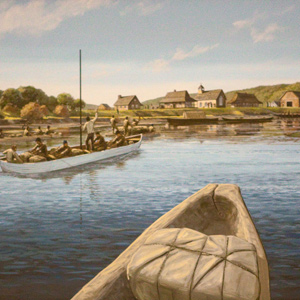
Leaving Reunion Bay, the members travel together for the first time since Travelers’ Rest. They drop off the Charbonneau family at their village and pick up Chief Sheheke and interpreter René Jusseaume. The citizens of St. Louis, having given them up for dead, provide a boisterous welcome.
This site is provided as a public service by the
Lewis and Clark Trail Alliance
with additional funding from the following: